Please rotate your device
To continue exploring this website, please rotate your device to a vertical orientation


Zerank 1 Small
ZeroEntropy/Zerank 1 Small
A SOTA open-source reranking model
Zerank 1 Small is a state-of-the art open-source reranking model for accurate search and retrieval by ZeroEntropy. ZeroEntropy also published the full-size Zerank 1 as a source-available model that can be licensed for commercial use.
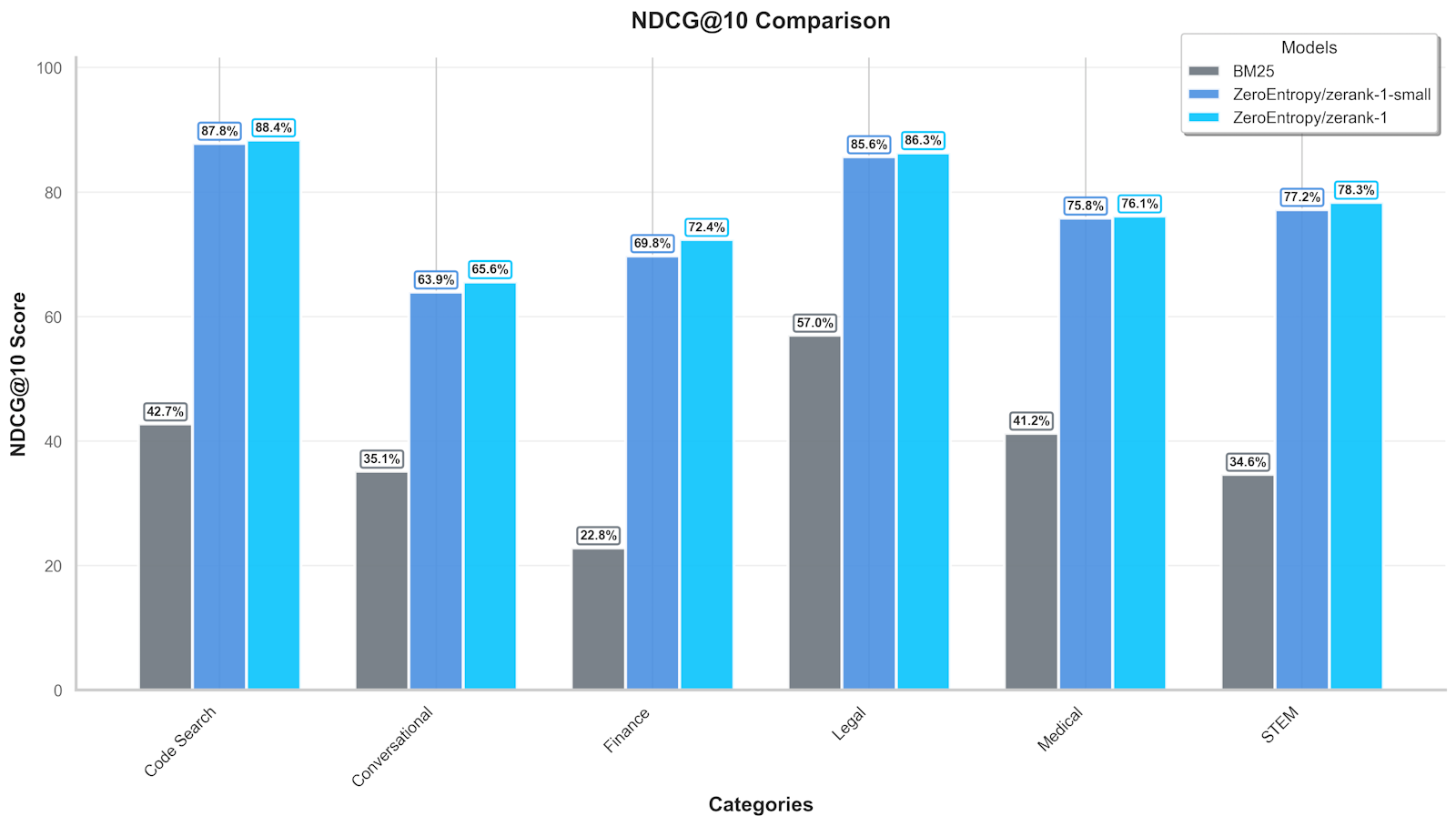
Zerank offers exceptional performance, comparing favorable to top closed-source models on reranking tasks.
With Baseten, you can run high-throughput and low-latency deployments of Zerank powered by BEI. Here are results from a benchmark running on a single H100 GPU with 64 concurrent requests of 500 tokens each.
| Model | Request latency | Token throughput |
|---|---|---|
| zerank-1-small | 143.1 ms | 224,425 tokens/sec |
| zerank-1 | 293.1 ms | 109,593 tokens/sec |
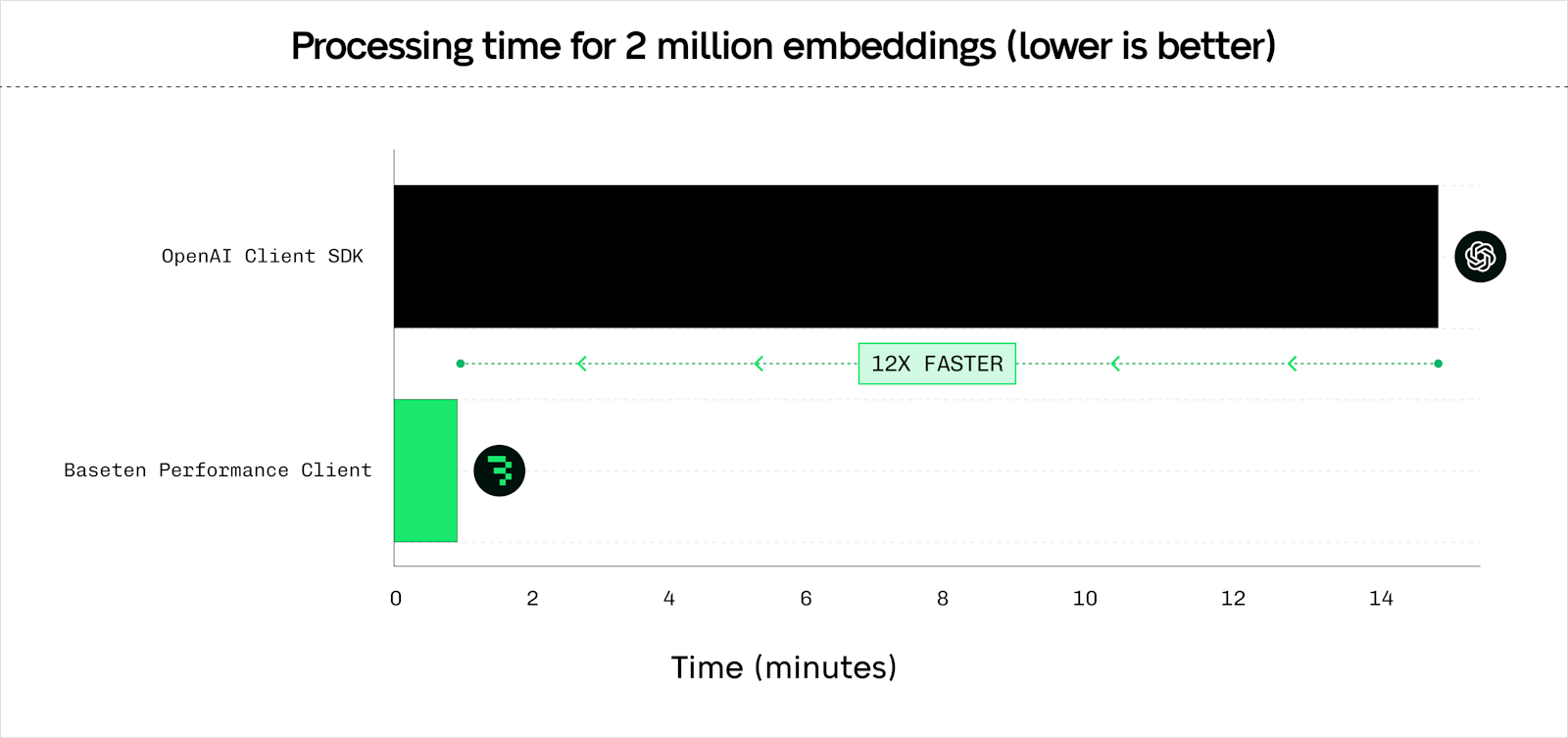
And with the Baseten Performance Client, you can run high-volume reranking jobs up to 12x faster than ordinary client code.
If you're building search at scale, try zeranker on Baseten today!
Sample inference code
Input
import os
from baseten_performance_client import (
    PerformanceClient, ClassificationResponse
)

api_key = os.environ["BASETEN_API_KEY"]
model_id = "xxxxxxx"
base_url = f"https://model-{model_id}.api.baseten.co/environments/production/sync"

client = PerformanceClient(base_url=base_url, api_key=api_key)

prefix = "<|im_start|>system\nJudge whether the Document meets the requirements based on the Query and the Instruct provided. Note that the answer can only be \"yes\" or \"no\".<|im_end|>\n<|im_start|>user\n"
suffix = "<|im_end|>\n<|im_start|>assistant\n<think>\n\n</think>\n\n"

def format_instruction(instruction, query, doc):
    if instruction is None:
        instruction = 'Given a web search query, retrieve relevant passages that answer the query'
    output = "{prefix}<Instruct>: {instruction}\n<Query>: {query}\n<Document>: {doc}{suffix}"
    return output

texts_to_classify = [
    format_instruction(task=None, query="What is the capital of China?", doc="The capital of China is Beijing."),
    format_instruction(task=None, query="What is the capital of China?", doc="The capital of France is Paris.")
]

response: ClassificationResponse = client.classify(
    input=texts,
    model="my_model",
    truncate=True,
    batch_size=16,
    max_concurrent_requests=32,
)
Output
[
  {
    "score": 0.9861514,
    "label": "yes"
  },
  {
    "score": 0.01384861,
    "label": "no"
  }
]